



What is Money, and Why Does It Need to Be Honest?
My journey in the world of cryptocurrency has led me to reflect deeply on the nature of money itself. As the creator of TEXITcoin, I've come to believe that honest money is essential for a free and prosperous society. In this article, I'll explore what money truly is, drawing inspiration from timeless ideas, and explain why honesty in money is non-negotiable. We'll look at insights from literature, economic thinkers, and real-world examples to see how cryptocurrency like TEXITcoin embodies these principles.
Let's start with a powerful perspective from Ayn Rand's Atlas Shrugged, through the character Francisco d'Anconia. In his famous speech at a wedding, d'Anconia flips the common saying "money is the root of all evil" on its head, declaring instead that "money is the root of all good." He argues that money is a tool of exchange that rests on the principle of voluntary trade among productive people. "Money is made possible only by the men who produce," he says. It's the barometer of a society's virtue—when money flows freely, it rewards innovation and hard work.

The Barometer of Virtue: Why Money is the Root of All Good
But d'Anconia warns of destroyers who undermine society by attacking money first. "When you see that trading is done, not by consent, but by compulsion—when you see that in order to produce, you need to obtain permission from men who produce nothing—when you see that money is flowing to those who deal, not in goods, but in favors—when you see that men get richer by graft and by pull than by work, and your laws don't protect you against them, but protect them against you—when you see corruption being rewarded and honesty becoming a self-sacrifice—you may know that your society is doomed." These words resonate today as we witness monetary systems manipulated by central authorities, eroding trust and value.
Building on this, let's turn to Jason Hommel's insightful article from 2008, "4 Fundamentals of the Silver Price." Hommel, a proponent of precious metals, examines silver through the lens of what makes good money. He outlines the core properties that define sound money: it must serve as a medium of exchange, a unit of account, and a store of value. (While he emphasizes these three, he also highlights additional qualities like durability, divisibility, fungibility, and anonymity, which could be seen as a fourth layer of robustness.)
Sound Money Fundamentals: Lessons from Silver and Gold
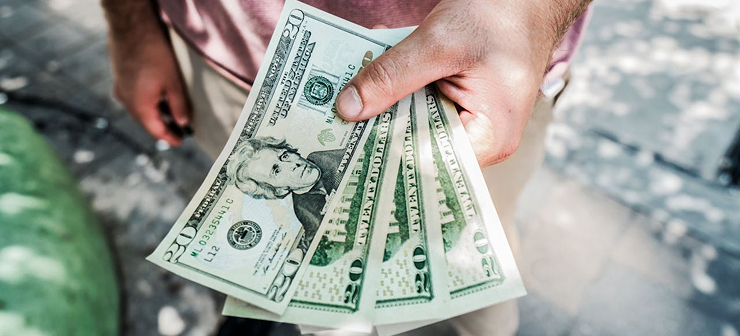
First, as a medium of exchange, money needs to be liquid, easily transportable, and durable. Silver excels here because it's valuable in small quantities, resistant to wear, and historically used in trade. Hommel notes that good money should have low transaction costs and be hard to debase.
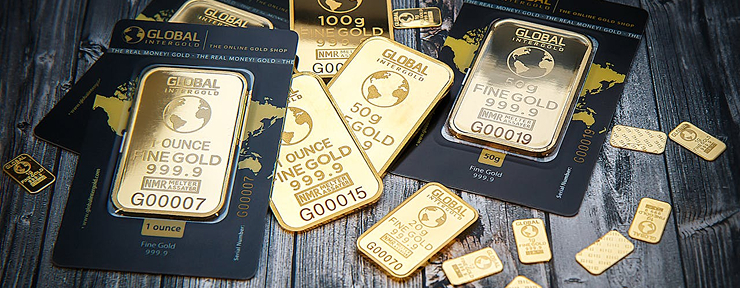
Second, as a unit of account, money must be divisible without losing value, fungible (interchangeable units), and measurable by weight or standard. Precious metals like silver can be divided and reformed at minimal cost, making them ideal for accounting purposes.

Third, as a store of value, money should be long-lasting, stable, and difficult to counterfeit. Hommel stresses that silver's scarcity and inherent value make it a superior store compared to fiat currencies, which can be inflated endlessly.
Hommel's fourth fundamental isn't a separate property but ties into the overall nature: the supply and demand dynamics of the asset versus fiat alternatives. He argues that silver's limited supply and growing industrial demand position it as undervalued money, while dollars fail because they lack these qualities—they're easily created, traceable, and prone to devaluation.
This brings us to cryptocurrency, which I see as the modern evolution of these principles. Crypto, when designed properly like Bitcoin or TEXITcoin, perfectly embodies the functions of good money.
As a medium of exchange, cryptocurrencies enable peer-to-peer transactions without intermediaries. TEXITcoin, with its fast, low-cost blockchain, allows Texans to trade value instantly across distances, much like digital silver. No banks or governments need to approve—it's voluntary and efficient.
As a unit of account, crypto's divisibility is unparalleled. Bitcoin can be divided into satoshis (100 million per BTC), and TEXITcoin follows suit with precise subunits. This makes it easy to price goods and services accurately, without the distortions of fluctuating fiat values.
As a store of value, well-designed cryptos shine. With fixed supplies—Bitcoin at 21 million, TEXITcoin at 353 million distributed over 138 years—they resist inflation. Proof-of-work mining ensures security and scarcity, mimicking the effort required to mine precious metals. Hommel would appreciate how crypto's anonymity (when used with privacy tools) adds that extra layer, protecting users from tracking.
In my view, crypto addresses Hommel's concerns about fiat failures. Dollars, as he says, are "fraud"—promises unfulfilled, backed by nothing but faith in governments that print endlessly.

This leads to the destructive force of inflation, which erodes wealth insidiously.
Inflation isn't just rising prices; it's the devaluation of currency through increased supply. When central banks print money, they dilute the purchasing power of every dollar in circulation. Savings lose value over time, punishing the prudent and rewarding debtors. As Hommel implies in his critique of dollars, this instability makes fiat a poor store of value.
Worse, inflation creates unequal benefits through the Cantillon effect, a concept from 18th-century economist Richard Cantillon, popularized by Max Keiser as "Cantillionaires." New money doesn't enter the economy evenly; it flows first to those closest to the source—banks, governments, and connected elites. They spend it before prices rise, gaining real wealth at the expense of everyone else. By the time it trickles down to average people, inflation has already driven up costs, effectively transferring wealth upward.
Think of it: During quantitative easing, trillions are created and funneled to financial institutions. They invest in assets like stocks and real estate, inflating bubbles that benefit the rich. Meanwhile, wages lag, and everyday expenses soar. This isn't accidental; it's a feature of fiat systems, breeding inequality and resentment.
Education in Action: TEXITcoin and the Path to Financial Sovereignty
Honest money counters this. It can't be arbitrarily inflated—its supply is predictable and limited. In TEXITcoin, the 138-year halving schedule ensures gradual distribution, preventing sudden dilutions. It's mined only in Texas, fostering local control and transparency. Crypto restores money to its roots: a tool for producers, not destroyers.
Why does money need to be honest? Because dishonest money corrupts society, as d'Anconia warned. It rewards manipulation over merit, erodes trust, and destabilizes economies. Honest money, like silver or well-crafted crypto, upholds justice—it's earned through work, stored securely, and exchanged freely.
In creating TEXITcoin, I aimed to revive these ideals. It's not just a currency; it's education in action, teaching Texans about sound money. As Hommel argues, when paper fails, real money endures. Crypto bridges ancient wisdom with modern tech, offering a path to financial independence.
We've seen fiat's flaws in hyperinflation cases like Weimar Germany or modern Venezuela. Crypto provides an alternative: decentralized, verifiable, and honest. By embracing it, we reject the Cantillionaires' game and build a system where value flows to creators.
In conclusion, money is more than paper or code—it's the embodiment of human effort and trust. It must be honest to foster good, as d'Anconia proclaimed, and fulfill its roles as Hommel described. Inflation's theft highlights the urgency. TEXITcoin is my contribution to this cause, inviting all to rediscover money's true potential.